

Latino nonprofits start storefronts and business programs to help entrepreneurs sell products, build networks and reach customers. The report shows how Latino nonprofits start shops that make supporting small businesses part of their work. In San Francisco and Phoenix, nonprofit leaders have opened retail spaces where Latino makers can sell their work and get practical support, according to NBC Bay Area’s report.
Mission Lotería opened a storefront in San Francisco’s Mission District after seven years of promoting local businesses through events. Founder Luis Quiroz said the space gives Latino entrepreneurs and artists a place to sell goods. Its colorful interior reflects the neighborhood, while the shop expands the nonprofit’s work beyond events such as taco tours and a Bad Bunny look-alike contest.
Quiroz said he remains nervous about meeting monthly numbers in a difficult economy and one of the country’s most high-priced cities. Still, he said regular visitors have followed the organization for years. The nonprofit received a $50,000 storefront opportunity grant after presenting its plan to a city panel. Quiroz said the grant went quickly toward rebuilding the space.

Latino Nonprofits Start Shared Retail Spaces
Mission Lotería stocks work from local sellers, including greeting cards, magnets and minitotes by Yesi Chavez. Chavez, who also works full-time as a hotel events administrator, said shoppers recognize her merchandise from pop-up markets. She said sharing space with other Latino makers makes the shop meaningful.
In Phoenix, Amor Collective sells merchandise made by Latinas, including concha bread earrings and Día de Muertos candles. Founder Stephanie Vasquez moved the shop from suburban Peoria to downtown Phoenix in August, accepting higher rent after a space next to her coffeehouse became available. She said the Latino community supported the store’s grand opening.
Vasquez founded Empowering Latina Leaders in Arizona, known as ELLA, after seeing how underpaid Latinas remain. A July quarterly earnings report from the U.S. Bureau of Labor Statistics found Hispanic female full-time workers earn 79% of the median earnings of their white counterparts. Vasquez began monthly pop-up markets for Latina entrepreneurs before opening Amor Collective four years ago in Peoria.
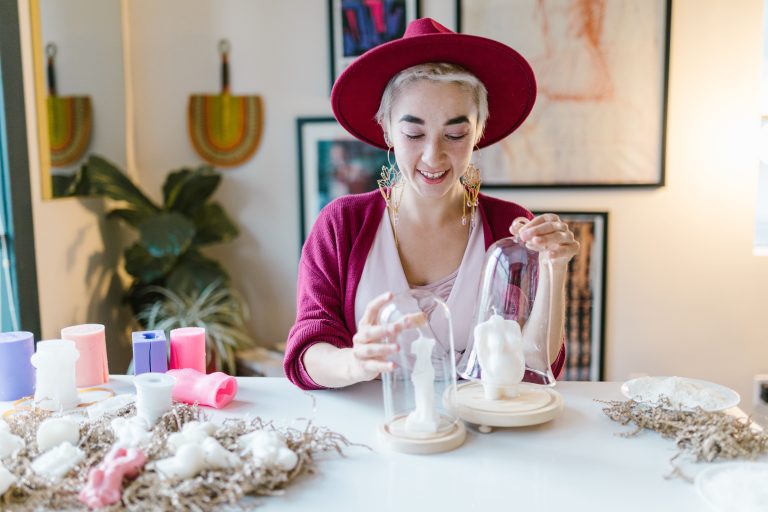
More than 35 entrepreneurs have signed one-year leases with Amor Collective. Vasquez arranges monthly meetings with guest speakers on public relations and banking. Some members have been afraid to attend because relatives have been detained by Immigration and Customs Enforcement, so Vasquez made the meetings available through Zoom.
Programs Connect Entrepreneurs With Resources
The organizations are also developing community spaces. Amor Collective has a nook for classes and meetings, and DJs have begun playing music on Sundays. Vasquez said she hopes to make the shop a venue for more community activities.
Mission Lotería plans to introduce entrepreneurs through social media, YouTube and a podcast. Construction is underway on a podcast room. Quiroz said he wants people to hear business owners’ stories and their journeys.
Support also comes through regional business groups. The North Central Massachusetts Chamber of Commerce launched its Latino Initiative for Development of Entrepreneurship and Resources in July. LIDER offers Latino-run businesses networking and educational opportunities, with some events and materials in Spanish. Chamber president and CEO Roy Nascimento said the initiative responds to an access gap as more Latino-led businesses form in the region.
These examples show how Latino nonprofits start by connecting makers with customers and practical resources. They also connect with other small-business coverage, including Spanish-language business assistance, networking for local owners and the personal demands of ownership.
Nascimento said Latino entrepreneurs are starting businesses at three times the rate of the general population. He also said the chamber has received no negative feedback about LIDER or its support for diversity, equity and inclusion. Quiroz, who said he was undocumented as an infant and now carries proof of legal permanent status, wants Mission Lotería to welcome Latino and Hispanic people regardless of where they were born. Its planned podcast and entrepreneur profiles will extend that invitation by giving local business owners a platform to tell their own stories.