

Diamond Quanta opens Petaluma facility for its first pilot system at a new Petaluma site, where the Silicon Valley startup is building its first major manufacturing system. The company expects the site to produce its first parts within months, creating a new base for its effort to bring engineered diamond materials to electronics and optics customers.
The Mountain View company opens Petaluma facility operations under the name “Diamond Valley,” invoking the North Bay’s former Telecom Valley technology cluster. Petaluma will become its primary California operations and process development center, while Mountain View remains its headquarters, the company announced Wednesday, according to The Press Democrat.
Diamond Quanta Opens Petaluma Facility for Pilot Production
At the center of the opens Petaluma facility project is Diamond Forge 1, a system designed to combine diamond synthesis, surface preparation, measurement and other processes needed to qualify products for customers. The company ultimately plans to license its processes and supply customers with similar equipment for their own production lines.

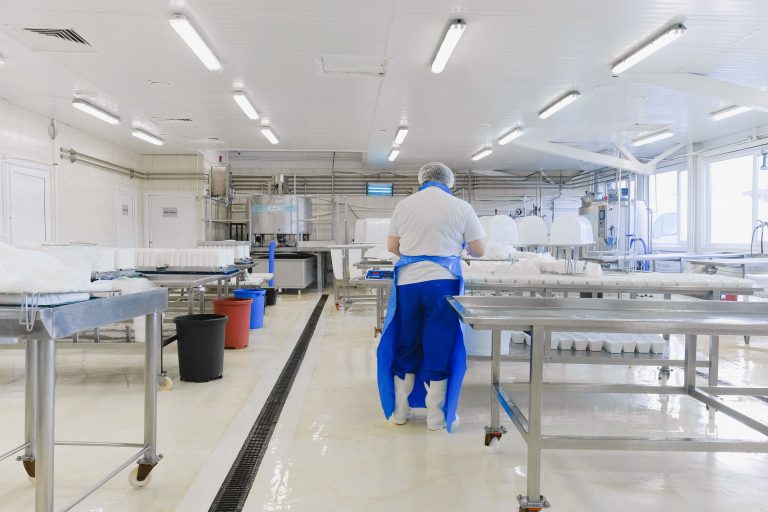
The buildout includes a 1,000-square-foot ISO Class 5 clean room, a controlled environment intended to limit airborne particles. Founder and CEO Adam Khan said the main tool will occupy much of the room and stretch about 25 feet. It requires 480-volt service and consumes tens of kilowatts while operating.
The operation is initially permitted for 10 jobs, mainly highly skilled technical and advanced manufacturing roles. Khan said further hiring depends on code-related improvements that would accommodate more employees and on customer qualification programs becoming production business.
“The initial jobs will consist of highly skilled technical and advanced manufacturing positions,” Khan said, adding that staffing would expand as customers are qualified and converted into production. That staged hiring approach connects the facility’s growth to commercial progress rather than a fixed headcount forecast.
Power Capacity and Customer Qualification Shape Expansion
Khan said existing industrial power infrastructure was one reason the company selected Petaluma as it opens Petaluma facility operations. Diamond Quanta also expects to use PG&E’s economic-development rate-matching program, which can reduce electricity costs by comparing California rates with competing locations.
Regional demand for advanced manufacturing space has increased, according to Kristin Hagedorn, research director for JLL’s Northern California industrial group. She said leasing this year had already surpassed the total for all of 2025, with semiconductor, drone, autonomous-vehicle and quantum-computing companies among the demand sources.
Diamond Quanta is initially targeting durable diamond optical surfaces and diamond-based thermal interfaces designed to remove heat from increasingly dense semiconductor systems. Longer-term research includes moving from thermal materials into active diamond microelectronics. Khan said production time varies by application and by the thickness of diamond required.
The company plans to showcase its first Petaluma-made parts at CES 2027 in Las Vegas, with demonstrations involving engineered-diamond optical surfaces and thermal interfaces for semiconductor and packaging systems. That planned showcase gives the startup a stated milestone as it works through customer qualification.
A Regional Bet on Advanced Manufacturing
Diamond Quanta’s “Diamond Valley” name is aspirational, Khan said, rather than a claim that a new cluster already exists. The company wants to establish what he called the “first node” around which suppliers and related businesses could develop.
The North Bay has existing links to optics, coatings and thin-film manufacturing, alongside the legacy of Telecom Valley. Khan said Diamond Quanta has discussed workforce development with Petaluma and Sonoma County, including possible community-college connections for clean-room operations and advanced-materials equipment.
The company’s move joins broader questions about how research, training and local businesses support technology growth. A university incubator plan also centers on space and equipment for early-stage companies. Federal small-business research funding offers another look at the infrastructure behind entrepreneurship, while a small-business award story follows a different path to local company recognition.
For Diamond Quanta, the next steps are practical: complete the pilot system, qualify customers and begin local production. The company says it expects its first parts from Petaluma within months.